In the long history of civilization in China, there have been many unique and elegant Chinese musical instruments. People use them to play beautiful music and convey rich emotions. Let's enjoy the charm of the Guqin, a traditional Chinese musical instrument.
Brief Introduction to Guqin
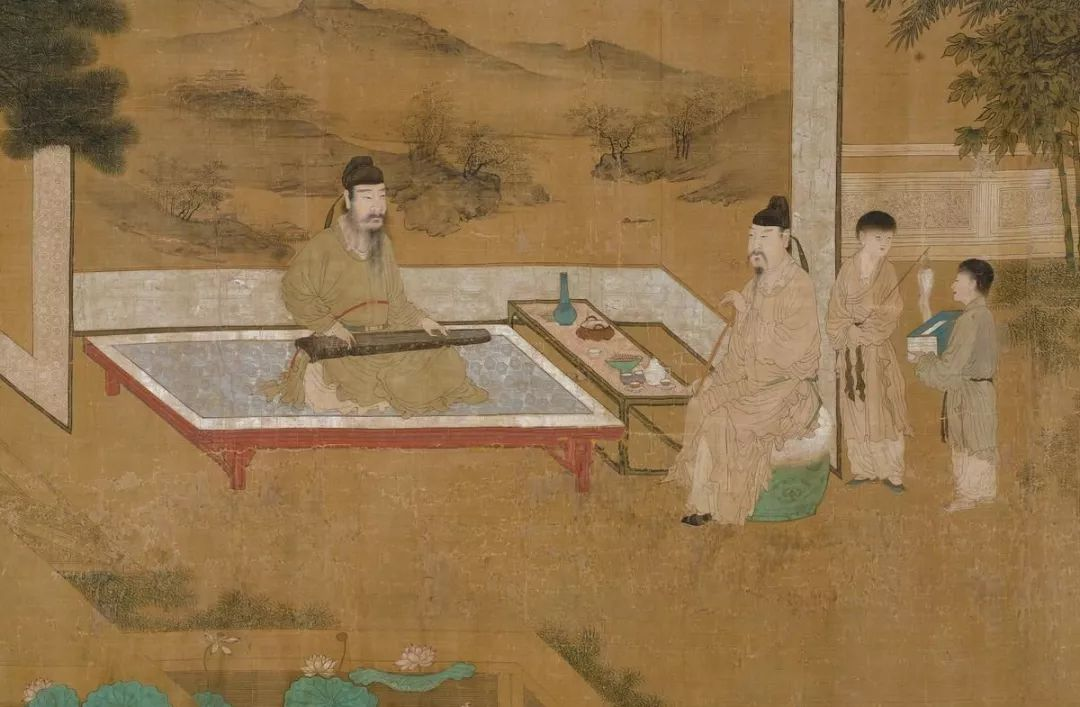
▲佚名 《重屏抚琴图》
The Guqin is a seven-stringed plucked Chinese musical instrument of the zither family with a history of more than 3000 years. The first character, GU, which means ancient was later added for classification. It can also be called Qixianqin (seven-stringed instrument).
The Guqin has always been viewed as the most eminent cultural activity practiced by the elites of ancient China. Of the four esteemed and cultured skills Guqin, Chess, Calligraphy and Painting, the Guqin was considered the most refined. Guqin has traditionally been favored by scholars and literati as an instrument of great subtlety and refinement. Its beautiful melodies helped maintain a peace of mind.
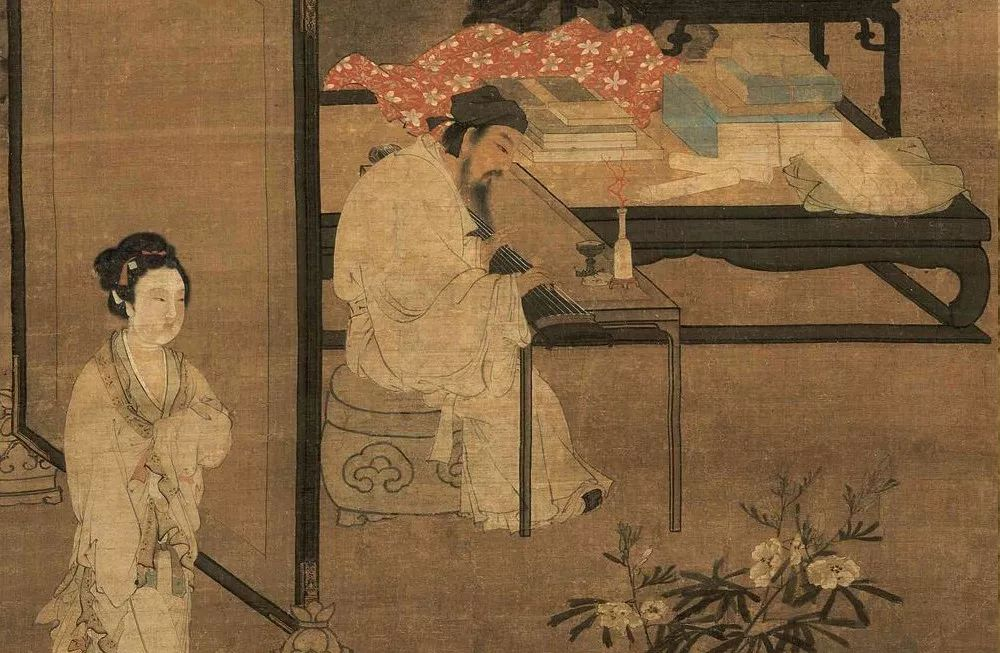
▲明 杜堇 《听琴图》
The Style Classification
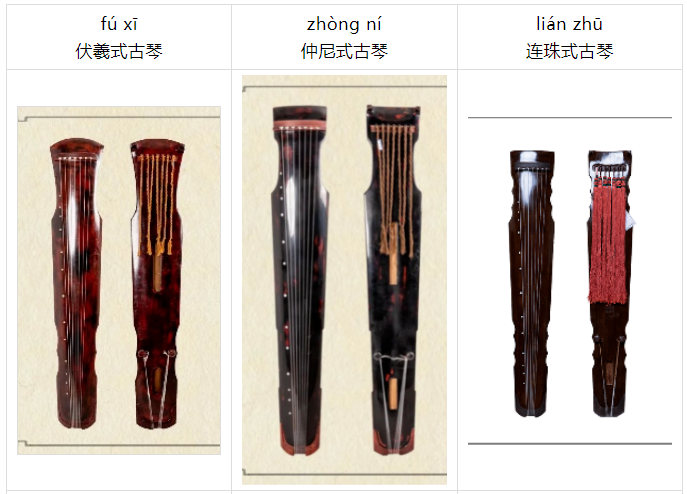
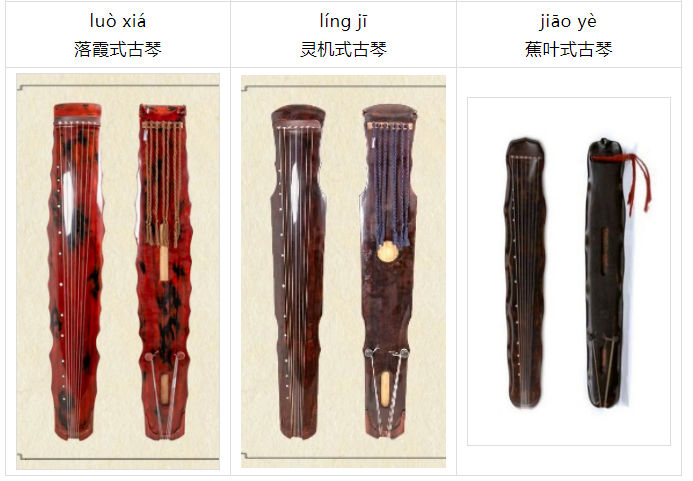
The Guqin is beautiful in shape. The most common styles are Fuxi, Zhongni, Luoxia, Lingji, Lianzhu and Jiaoye. They are mainly differentiated according to the shape of the body, neck and waist of the instrument.
Guqin Sheet Music
The musical notation for the Guqin is very special, known as the Jianzi Pu, which means abbreviated character notation. It was created by Cao Rou, a Guqin master at the end of the Tang Dynasty. Jianzi Pu simplified the older system of Wenzi Pu, written descriptions that explicitly explained fingering for a song. It shows the fingering of both hands. This ancient and special notation system has been used for thousands of years. Today, if people want to learn to play the Guqin, they still use the Jianzi Pu system.
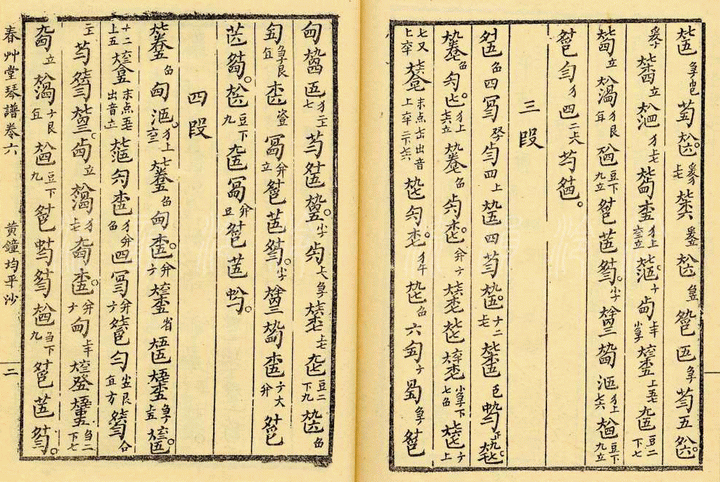
▲古琴记谱法:减字谱
Guqin Notation: Jianzi Pu
Story of the Melody
The musical tune of the Guqin is not only beautiful, but also often has a moving story behind it. In traditional Guqin notations, each piece is usually accompanied by an article, which introduces the story and artistic conception of the piece to help the musician better understand the feeling of the tune.
Today, let us enjoy one of the most famous Guqin songs - "High Mountains and Flowing Water”. It tells the story of two true friends Boya and Zhong Ziqi.
Legend has it that in the Pre-Qin Period, the Guqin master Boya once played the Guqin on a barren mountain. Zhong Ziqi, the woodcutter, understood that this music described the mountain and the water. Boya exclaimed in surprise: "It's good, we have the same heart." After Zhong Ziqi died, Boya lost his confidant, and broke the guqin and cut the strings, and didn’t play it for the rest of his life. Boya was good at playing, and Zhong Ziqi was good at appreciating, which is the origin of the word ‘zhī yīn’, meaning an intimate friend.


 苏公网安备 32100302010246号