
从前,有四个盲人很想知道大象是什么样子,可他们看不见,只好用手摸。
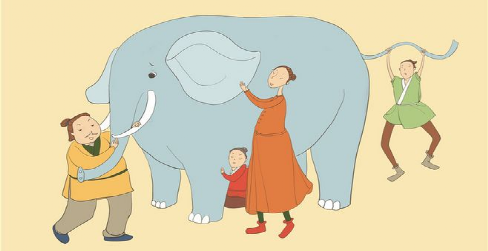
胖盲人先摸到了大象的牙齿。他就说:“我知道了,大象就像一个又大、又粗、又光滑的大萝卜。”
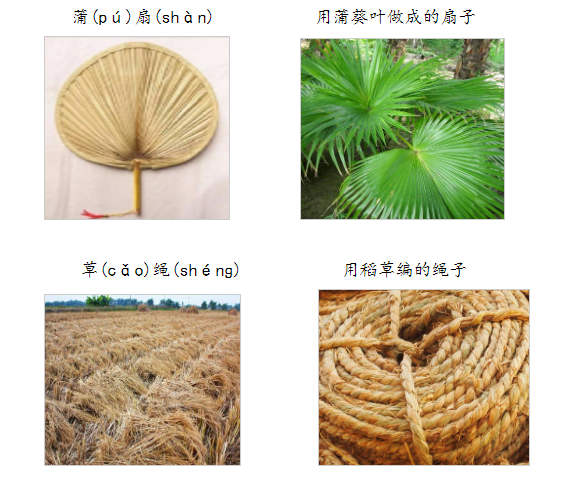
高个子盲人摸到的是大象的耳朵。“不对,不对,大象明明是一把大蒲扇嘛!”
矮个子盲人大叫起来:“你们净瞎说,大象只是根大柱子。”原来他摸到了大象的腿。
而在后面的瘦盲人反驳道:“大象哪有那么大,它只不过是一根草绳。”原来他摸到的是大象的尾巴。
他们都说自己摸到的才是大象真正的样子。而实际上他们一个也没说对。
这个故事告诉我们:不能只看事物的一部分而应看全局,那样才能全面和真实地了解事物的情况。
Long ago, there were four blind people. They wanted to know what elephants looked like. Because of the blindness, they could only touch the elephant.
The fat blind person touched the elephant’s ivory first. He said: “ Oh, I see! The elephant is big, thick and smooth, just like the carrots.”
The tall blind person touched the elephant’s ear and yelled: “ No, no, no. The elephant is a big fan!”
The short blind person touched the elephant’s leg. He said: “ You are all wrong! The elephant is a pillar.”
The old blind person said: “ The elephant is not that big. It’s just like a rope.” He was touching the elephant’s tail.
Each of them said he himself was right. We all know that none of them is right.
We should look at the whole picture instead of only seeing part of it. Only in that way can we fully and truly understand the situation of things.
【生词】
汉字 |
拼音 |
词性 |
英文释义 |
HSK |
盲人 |
mángrén |
n. |
blind people |
HSK - |
摸 |
mō |
v. |
feel;touch |
HSK 5 |
光滑 |
guānghuá |
adj. |
smooth |
HSK 5 |
明明 |
míngmíng |
adj. |
obviously |
HSK 6 |
扇(子) |
shànzi |
n. |
fan |
HSK 5 |
瞎说 |
xiāshuō |
v. |
talk nonsense |
HSK 5 |
反驳 |
fǎnbó |
v. |
refute |
HSK 6 |
真正 |
zhēnzhèng |
adj. |
real |
HSK 4 |
部分 |
bùfen |
n. |
part |
HSK 4 |
全局 |
quánjú |
n. |
whole situation |
HSK 6 |
了解 |
liǎojiě |
v. |
know;understand |
HSK 3 |
【小知识】

 苏公网安备 32100302010246号