
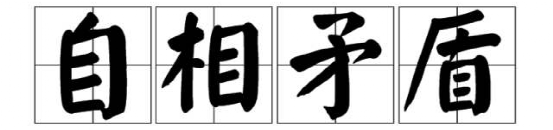
古时候,有一个人,他既卖矛又卖盾。
一天,他在集市上卖兵器,非常得意。他举起他的盾说:“我的盾非常坚固,无论怎样好的矛,都刺不穿它!”
说完,他又举起他的矛夸赞道:“我的矛非常锋利,无论怎样坚固的盾都能刺进去!”
站在旁边的人听了,都暗暗地发笑。有人问他:“照你这样说,你的矛是最锋利的,无论怎样硬的盾都刺得进去;你的盾又是最坚固的,无论怎样锋利的矛,也别想刺进去。那么,现在我用你的矛来刺你的盾,看看结果会怎样呢?”
那个人尴尬得连一句话也答不上来。
这个故事告诉我们:说话不能过分夸大事实,要仔细思考之后再说。
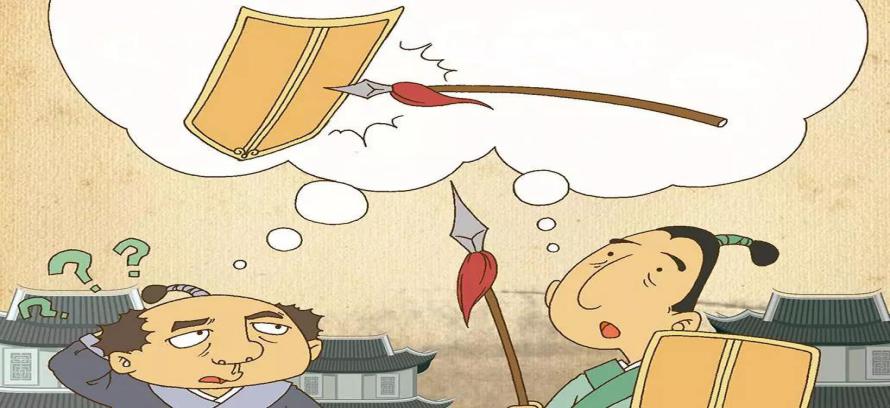
In ancient times, there was a man who sold spears as well as shields.
One day, he hawked his wares at the market and was very pleased with himself. He held up a shield and said: "My shield is very strong. No matter how sharp a spear is, it cannot pierce my shield."
After that, he held up his spear and bragged: "My spear is very sharp. No matter how strong a shield is, my spear can pierce it.
When the people around heard this, they laughed up their sleeves. One of them asked him: "According to what you said, your spear is the sharpest. No matter how strong a shield is, your spear can pierce it. Your shield is also the strongest. No matter how sharp a spear is, it cannot pierce your shield. Now, if I poke your shield with your spear, what will be the result?"
The man was so embarrassed that he could not utter a single word.
This story tells us that we can't exaggerate the facts. What we say should be based on the truth.
【生词】
汉字 |
拼音 |
词性 |
英文释义 |
HSK |
兵器 |
bīngqì |
n. |
weapons |
HSK - |
矛 |
máo |
n. |
spear |
HSK - |
盾 |
dùn |
n. |
shield |
HSK - |
矛盾 |
máodùn |
n. |
contradiction |
HSK 5 |
举 |
jǔ |
v. |
lift |
HSK 5 |
坚固 |
jiāngù |
adj. |
strong |
HSK 6 |
无论 |
wúlùn |
con. |
no matter what |
HSK 4 |
锋利 |
fēnglì |
adj. |
sharp |
HSK 6 |
刺 |
cì |
v. |
stab |
HSK 6 |
尴尬 |
gāngà |
adj. |
embarrassed |
HSK 6 |
【句型】
1.既……又……
她既聪明又努力。
她既会唱歌,又会跳舞。
2.无论……都……
无论什么时候你都不要说谎。
无论任务多么困难,我们都要坚持把它完成。
【小知识】
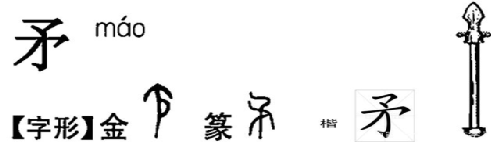
矛spear
矛是一个象形字(hieroglyph)。
This is the form evolution of “矛”.

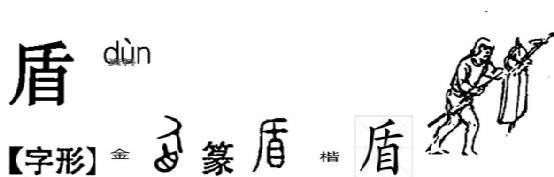
盾shield
盾是一个会意字(Associative Compounds)。
This is the form evolution of “盾”.

 苏公网安备 32100302010246号