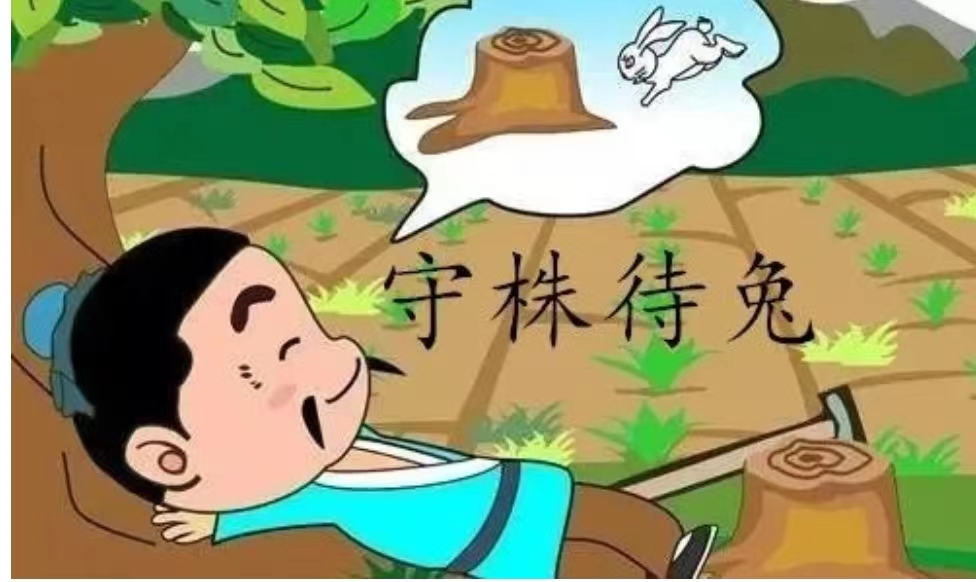
从前,有一个农民。一天,他在田里干活儿的时候,忽然跑过来一只野兔,恰好撞在一个树桩上,撞死了。农民把兔子捡起来带回了家,美美地吃了一顿兔肉。当晚,他就想:“我何必辛辛苦苦地干活儿呢?每天在树桩旁等着捡撞死的野兔就好了。”于是他从此不再干活儿,每天在树桩旁等待野兔的到来。
不幸的是,他再也没有发现一只野兔撞在树桩上。守株待兔形容那些不想通过自己的努力还想获得成功的人。
Once upon a time, there was a farmer. One day, while he was working in the fields, he saw a hare, it was running too fast and bumped into a tree stump in front and die.
The farmer took the hare home and cooked a delicious meal for himself.
That night he thought: "I needn't work so hard. All I have to do is to wait every day by the stump to pick up the hare that rams into it."
So from then on he gave up farming, and stood by the tree stump waiting for the hare to come and bump into it.
Unfortunately, he never saw another hare run into the tree stump again.
This set phrase describes those who tend to achieve success without self effort.
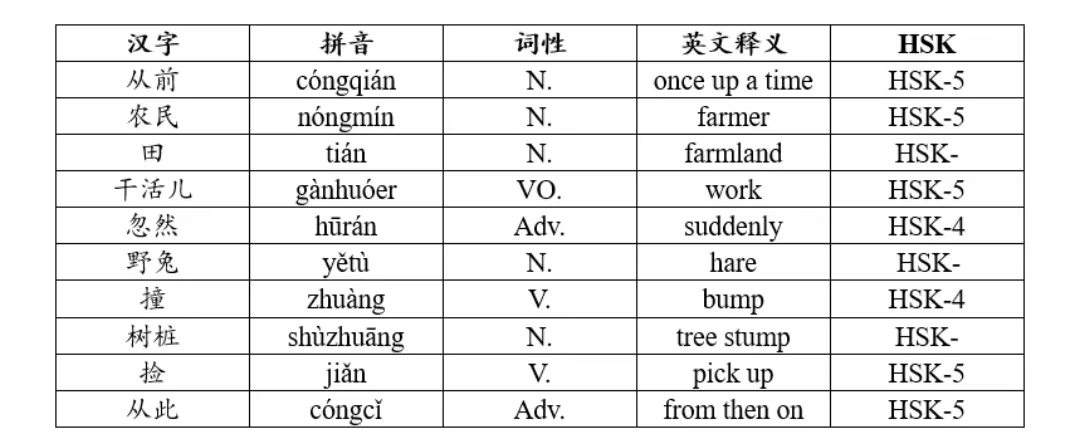
生词
语法
原文中“撞死了”是结果补语(resultative complement),结果补语指用在动词之后表示动作变化的结果的句子成分。
肯定形式:v+v/adj+(了)
例如:听懂了;吃完了;看见了;
否定形式:没有+v+v/adj+(了)
例如:没有听懂;没有吃完;没有看见;
疑问形式:v+v/adj+了+吗/没有?
例如:听懂了吗/没有? 吃完了吗/没有? 看见了吗/没有?
小知识
株:露出地面的树桩。

 苏公网安备 32100302010246号