The Pipa is a traditional Chinese musical instrument different from the "Guqin" which preceded it. The Pipa is not a native Chinese musical instrument, but a "hybrid" integration of eastern and Western musical instruments.
The Persian (from present day Iran) was introduced into China more than 2000 years ago, and similar stringed instruments had simultaneously been developed in China during the Qin Dynasty (221-207 BC). With the passage of time, the Chinese and Persian musical instruments integrated with each other and slowly evolved into the Pipa we see today.
Development and Evolution
For thousands of years, the Pipa has enjoyed a strong cultural popularity. The reason lies in one word, "change".
The ’s shape has become more and more complex, the playing accessories have become more and more exquisite, the musician’s skills have become more and more abundant, and the classical repertoire is changing with each passing day. Since ancient times, the Pipa has never stopped changing.
Here are some of the most iconic and historic changes in the evolution of the Pipa:
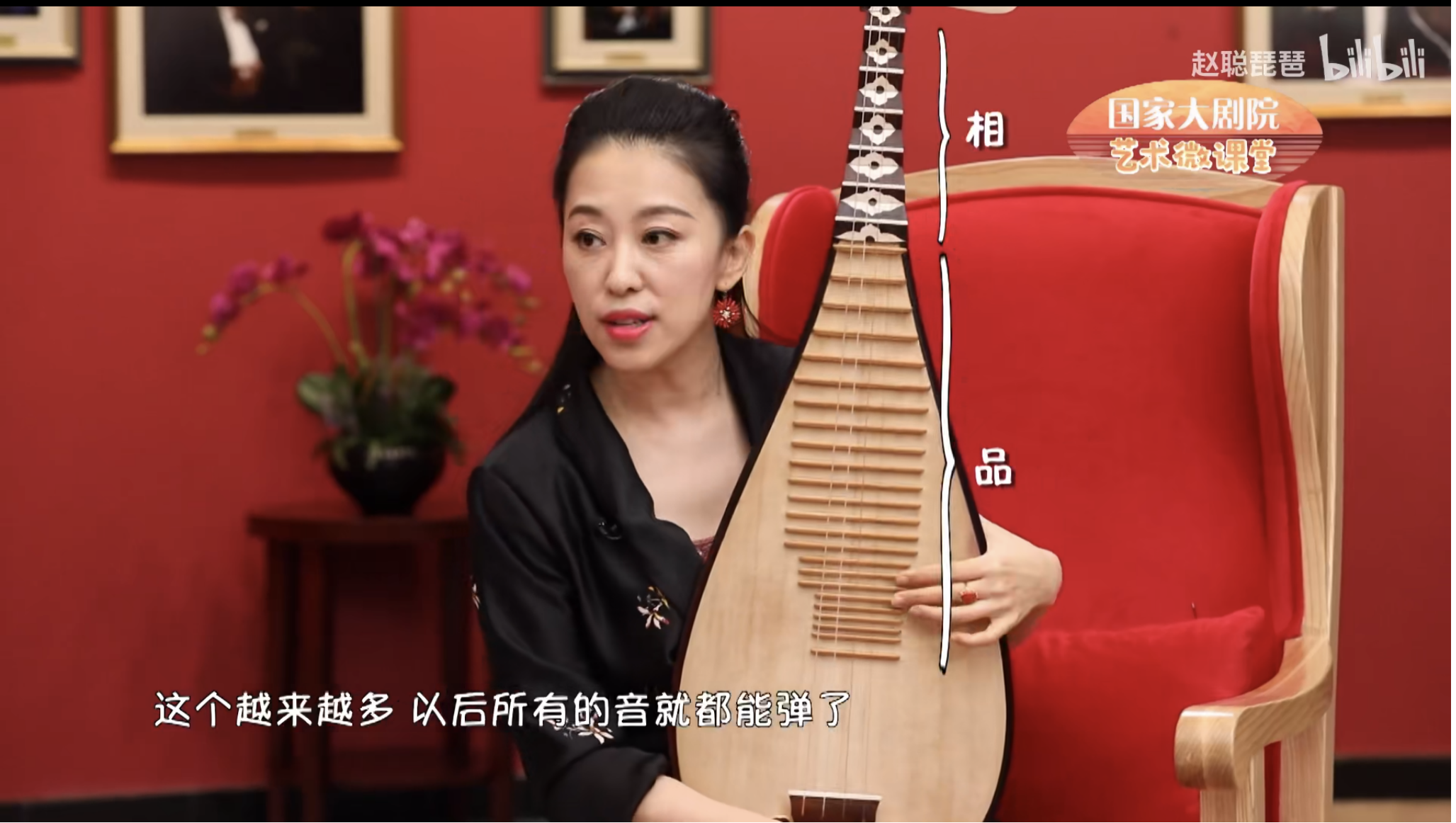
Structure: In the Tang Dynasty, the Pipa had only a few "frets" and several "bamboo frets". Currently, there are 6 "frets" and 24-28 "bamboo frets".
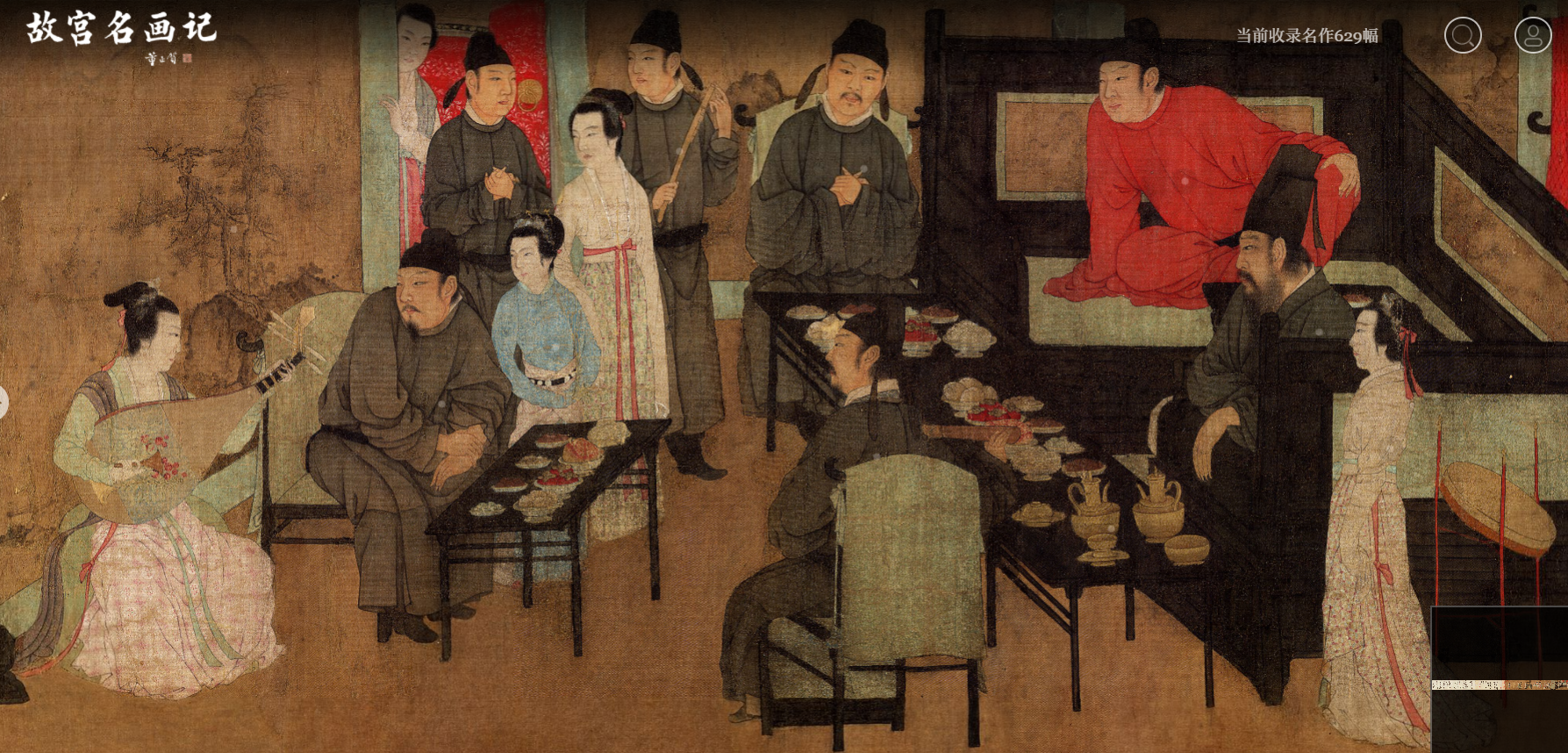
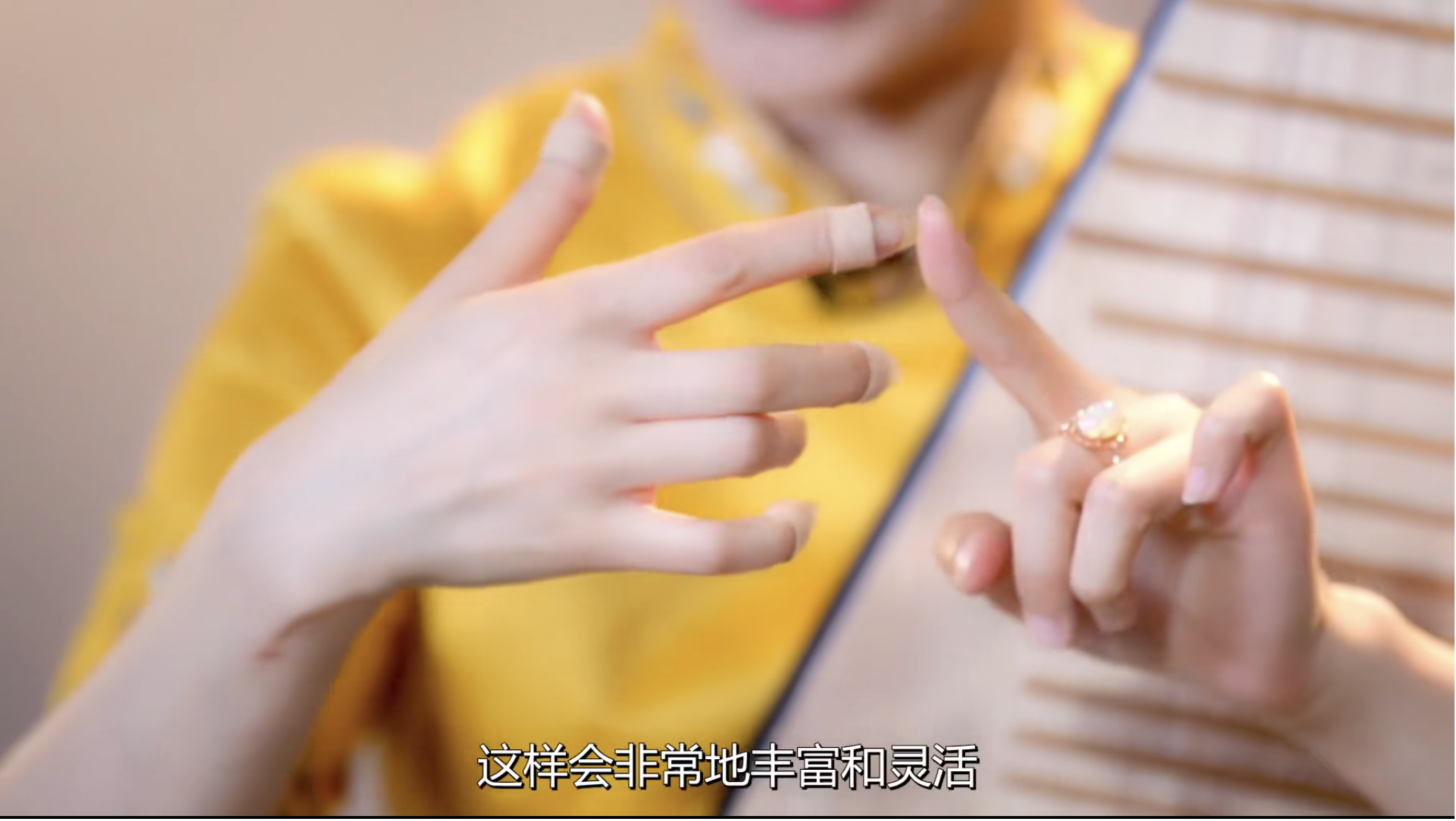
Plectrum: The strings were played using a large plectrum shaped like a flat rice scoop in the Tang dynasty, which was depicted in the painting Night Revels of Han Xizai. This technique is still used to play the Japanese biwa, while players in China typically use the fingernails of their right hand .
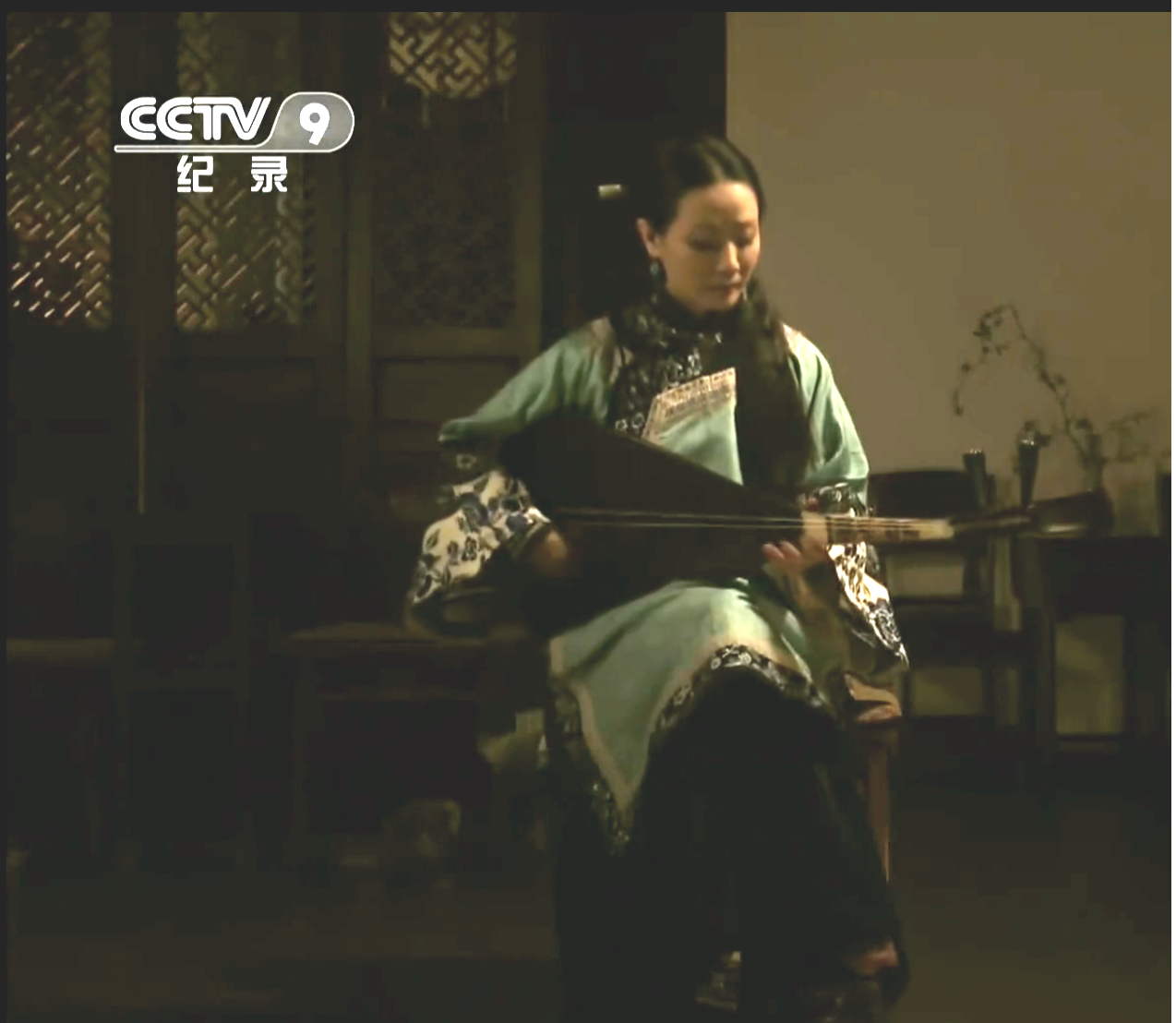
Playing position: The Pipa is held in a vertical or near-vertical position during performance, although in the early periods the instrument was held in the horizontal position or near-horizontal. Starting in the 10th century, players began to hold the instrument "more upright", as the fingernail style became more important. This change greatly promoted the rapid development of playing techniques, and it became the "king of musical instruments".

Pipa pieces in the common repertoire can be categorized as wen (文, civil) or wu (武, martial). The wen style is more lyrical and slower in tempo, with softer dynamics and a subtler tone. Such pieces typically describe love, sorrow, and scenes of nature, such as Flowery Moonlit River in Spring. Pieces in the Wu style are generally more rhythmic and faster, and often depict scenes of battles. They are played in a vigorous fashion employing a variety of techniques and sound effects as heard in Ambushed from Ten sides.
Scan this QR code and feel the charm of , the "king of folk music"

As one of many representative traditional Chinese musical instruments, the was born in ancient times and spread over the years into modern times. It has gone through wind and frost for thousands of years, but it has never stopped growing. Chinese players attach importance to heritage and development. They not only seek innovation, refinement and breakthroughs in performance techniques and musical scores, but also pay attention to the integration of eastern and western music elements, and ancient and modern musical elements. They are committed to creating works in modern language that meet the aesthetic needs of modern people and young people.
Music is a language without borders. Through this series of articles, we hope you have gained a certain understanding of Chinese traditional instruments and music. Today, we will present you an audio-visual feast of Chinese folk music. I hope the musical instruments from ancient oriental nations can move your love of music.


 苏公网安备 32100302010246号